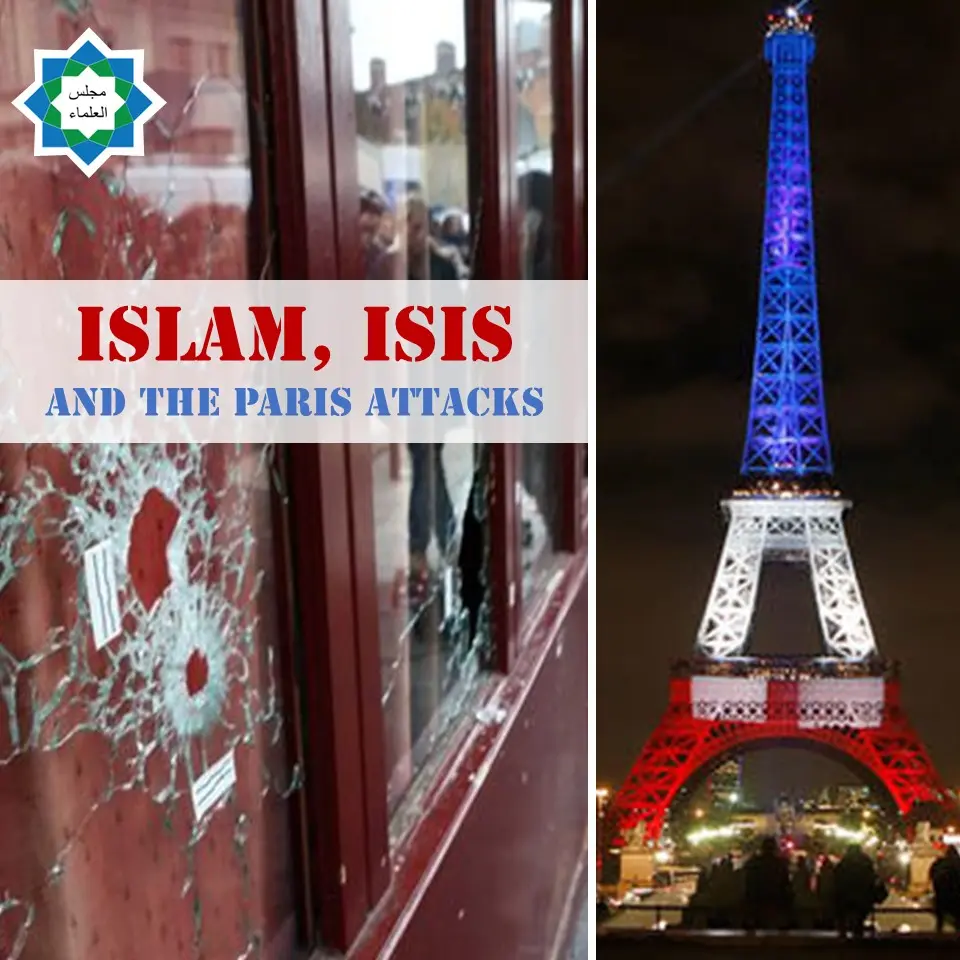
The Majlis ul Ulamaa (Council of Scholars) of Trinidad and
Tobago notes the attacks perpetrated on Friday November 13th, 2015, in Paris
that have since dominated the headlines of major media reports, as well as
social media discussions, internationally.
We recognise that these attacks were part of a wider series
of (on-going) attacks that were conducted in Beirut, Tunisia, Kenya and
Nigeria, and alongside volatile and mostly severe instability currently
manifest in Syria, Palestine, Iraq and Afghanistan.
We have seen unverified reports in which responsibility for
these attacks were claimed by ISIS, according to international media.
As is the case in recent related events, the conversation
and thrust that followed – by many persons in western societies such as ours –
are done within the context of Islamic ideology and Muslims in general. Many
equate Islam and Muslims with violence and warfare, whilst others defend Islam
and relegate perpetrators of such actions to extremist groups.
This incident raises two critical issues:
- What is the Islamic position and justification relative to
such actions?
- How do we deal with the backlash from a hostile society
following such actions?